Visiting Us?

Here are some great tips we advise to prepare yourself and your kitty cat for their visit with us.

  • Acclimate your pet to the carrier. Approach this by bringing the carrier into the home a couple of weeks prior or permanently, leaving the door open or the lid removed. Offer bedding, play, encouragement, and treats to create positive interactions and a good overall experience.
  • Use of synthetic feline pheromones like 'Feliway', in the household and carrier a day before or day of the veterinary visit should provide a calming effect.
  • Keep the carrier warm, covered by a towel or blanket, and quiet in the vehicle. Reduce stress from loud noises, bright lights, strange smells, and rapid changes in environment.
  • The bottom of the carrier should have a blanket or towel for cushioning, as well as a pee pad, absorbable material, or raised carrier grate to reduce the chance of soilage.
  • Whether your kitty is transported by a car or another mode of transport, it is important to keep driving steady and even, take shorter routes. The temperature inside the car should reflect the cat's needs. Strong smells should be avoided along with loud noises, i.e radios or music unless cat-specific.
  • One of our vets may recommend calmative or sedative medications for your cat to reduce stress. Our team will provide information regarding the use of medications prior to a visit.

"Cats are a predatory and prey species with unique resource and territory needs that are easily disrupted by events such as veterinary visits. Disruptions increase protective emotions in the cat, leading to negative behavioral outcomes during the visit."

"Stressor stacking describes the cumulative stress resulting from numerous disruptions to the cat’s routine and territory in preparation for the veterinary visit. These cumulative changes increase fear-anxiety and frustration, predisposing to negative behavioral outcomes during the veterinary visit. Adapted from International Cat Care." Kelly St. Denis, MSc, DVM, DABVP (Feline Practice), 'From the Cat’s Point of View: Creating a Cat-Friendly Veterinary Environment' Issue: March/April 2024. https://todaysveterinarypractice.com/behavior/creating-a-cat-friendly-veterinary-environment/

Once in the clinic, our customer service team will greet you and usher you to our 'cat parking stations' which are up from the ground. We have Feliway spray and blanket covers at your convenience. 

senior

Senior Cats

Exactly what kind of preventive care does my old cat need?

Read More
kitten

Kittens

How do I look after my new kitten?

Read More
dental

Dental

How do I care for my cats teeth?

Read More

A tranquil haven for cats and their carers staffed by experienced cat loving professionals.


Dietary History

Please fill this form in if you have made an appointment for your cat to see us. If you are bringing more than one cat please fill out and submit a form for each of them. Thank you.


    OverweightIdeal weightUnderweight


    IndoorsOutdoorsIndoors & Outdoors


    Very activeModerately activeSleeps all day

    reCaptcha v2 in use. See Terms of Service and Privacy Policy here.

    reCAPTCHA V3

    25 September 2015

    Are your cats friends – or foes?

    (function(d, s, id) { var js, fjs = d.getElementsByTagName(s)[0]; if (d.getElementById(id)) return; js = d.createElement(s); js.id = id; js.src = "//connect.facebook.net/en_US/sdk.js#xfbml=1&version=v2.3"; fjs.parentNode.insertBefore(js, fjs);}(document, 'script', 'facebook-jssdk')); Ever wondered if your cats are #FelineFriends? In a recent survey, almost half of owners with two or more cats are... Posted by Cats Protection on Monday, September 21, 2015
    23 September 2015

    Snake bite season

    As the weather warms up the danger of our cats finding a snake in the bush around our Canberra suburbs increases. At first the snakes are slow and easy to catch, but they are also full of venom. If your cats wander away from your yard they may find a snake and attempt to bring it home for you. Usually early in the season cats are faster than snakes and avoid getting bitten. However, every year we see a few cats who don't move fast enough. A big dose of venom may cause collapse, drooling, trembling, disorientation, dilated pupils and/or vomiting. Some cats appear to recover and then collapse again. If you suspect your cat has just been bitten do not hesitate to phone us or the Animal Emergency Centre immediately and come straight in. A cat who appears to be drunk or who cannot move at all may have been bitten by a snake some hours or even a day before. They are like 'floppy dolls' and often talk more than usual.It is still important to get your cat to a vet as soon as possible. The treatment is antivenom, pain relief, intravenous fluids and whatever supportive care is necessary. The majority of cats survive. The best prevention is keeping your cat indoors.
    22 September 2015
    cat with bow tie on

    Pica or what did you just eat????!!!!!

    Pica is the abnormal appetite for non-food materials, such as wool, fabrics, cat litter, houseplants or licking concrete or stones. It can arise as a behavioural problem or can be the result of an underlying medical problem such as anaemia. Behavioural pica Behavioural pica often is a long standing problem in healthy cats or in playful kittens. They are usually seen at a clinic for vomiting and reduced appetite due to an intestinal obstruction with odd objects, or toxic substances. Behavioural pica may also increase during times of stress (e.g. new pets and moving house). Siamese and related breeds are particularly prone to fabric eating and this is often a chronic problem starting at a young age. It is presumed that there is a genetic component to the habit and , although incompletely understood, it is thought that the endorphin release the cat experiences makes the habit addictive. Some cases are very difficult to manage and consulting a veterinary behaviourist is highly recommended. Pica due to medical conditions Pica can be seen in cats with chronic anaemia or intestinal problems – they consume excessive amount of grass or plant material and consequently vomit, have diarrhoea or lose weight. Grass/outdoor plant ingestion in cats Grass eating is common in cats. The reasons for this is not fully understood but it is suspected that grass has some beneficial effects on the stomach and intestines, including easing nausea. Grass eating is not problematic unless the is also showing symptoms such as vomiting, diarrhoea or eating a toxic plant (i.e lilies). Some owners grow grass on trays indoors for their cats to eat – this may discourage houseplant eating in indoor cats. Empirical treatments Steps can be taken to prevent cats from eating odd things: Place wool, blankets and clothing out of reach or sight Hide electrical wires or protect them with cord guards Remove houseplants Use non-clay based litter or placing only shredded/torn up newspaper in litter trays. Behavioural pica can be challenging to manage; a thorough examination and consultation with a veterinarian will help rule out common causes and allow prompt treatment. Normal 0 false false false EN-AU X-NONE X-NONE /* Style Definitions */ table.MsoNormalTable {mso-style-name:"Table Normal"; mso-tstyle-rowband-size:0; mso-tstyle-colband-size:0; mso-style-noshow:yes; mso-style-priority:99; mso-style-parent:""; mso-padding-alt:0cm 5.4pt 0cm 5.4pt; mso-para-margin-top:0cm; mso-para-margin-right:0cm; mso-para-margin-bottom:8.0pt; mso-para-margin-left:0cm; line-height:107%; mso-pagination:widow-orphan; font-size:11.0pt; font-family:"Calibri",sans-serif; mso-ascii-font-family:Calibri; mso-ascii-theme-font:minor-latin; mso-hansi-font-family:Calibri; mso-hansi-theme-font:minor-latin; mso-fareast-language:EN-US;}
    14 September 2015

    Ginger’s midnight snack

    Ginger thought she'd struck it lucky when she found a half finished barbecue chicken in the TV room. She gobbled up as much as she could before the family returned. Next morning she felt rotten. Her stomach felt as if it was full of knives and she couldn't stop vomiting. Her carers rushed her off to Canberra Cat Vet. After all the vomiting she was dehydrated and she couldn't bear anyone touching her. An Xray of her belly showed a long thin chicken bone in her stomach, on the far left. Cooked bones do not digest very well and this bone was sharp and could pierce the stomach wall if not removed. Ginger had emergency surgery to remove that long bone. Dr Kate found another smaller bone blocking the outlet from the stomach to the intestine. It was the reason for the vomiting. Kittens and young cats are particularly fond of chewing and sometimes swallowing odd things. Keep cooked bones, hairbands, tinsel, string, coins, elastic bands, fruit stones, hard long grass, nut shells and other indigestible objects well away from them. You'll find more information on keeping cats safe on the excellent iCatcare site.
    18 August 2015

    Gastro virus spreading north

    Vets at Canberra Cat Vet are urging cat owners, especially those with kittens less than 12 months old to check their vaccination records. They should have had vaccinations against Panleukopaenia virus, also known as Feline Enteritis, at approximately 8, 12 and 16 weeks old with a booster at about 15 months of age. Panleukopaenia virus, has spread north from Melbourne to Mildura. Vets in Mildura diagnosed the virus in a litter of 5 month old kittens and a 12 month old male cat. The virus will continue to advance through inadequately vaccinated cats. The virus causes severe diarrhoea, collapse of the immune system, fever and dehydration. There is no cure but some cats survive with supportive treatment. The vaccine is very effective as long as kittens have had the last of their boosters from about 14-16 weeks of age.
    18 August 2015

    Save the date

    Oliver invites all cat lovers to Canberra Cat Vet's second open night on Friday, 23rd October, 5.30pm. Look behind the scenes at a cat hospital, meet cat sitters and boarding establishment owners, chat with our vets and nurses, meet other cat lovers, and learn about cat enclosures, flea control, cat (mis)behaviour, pet insurance, dental disease, cat toys. Join us for drinks and nibbles while you browse the stalls. Oliver's official photographer will be judging cutest and funniest cat photos - competition opens early October. Watch Facebook for details.
    13 August 2015

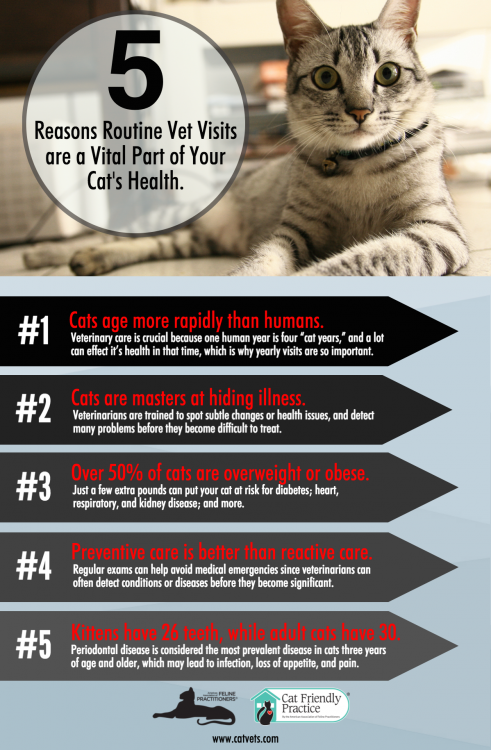
    5 Reasons for Routine Vet Visits

    10 August 2015

    How to tell if your cat really loves you!

    5 August 2015

    Ever wondered why cats rub their faces on things…