Visiting Us?

Here are some great tips we advise to prepare yourself and your kitty cat for their visit with us.

  • Acclimate your pet to the carrier. Approach this by bringing the carrier into the home a couple of weeks prior or permanently, leaving the door open or the lid removed. Offer bedding, play, encouragement, and treats to create positive interactions and a good overall experience.
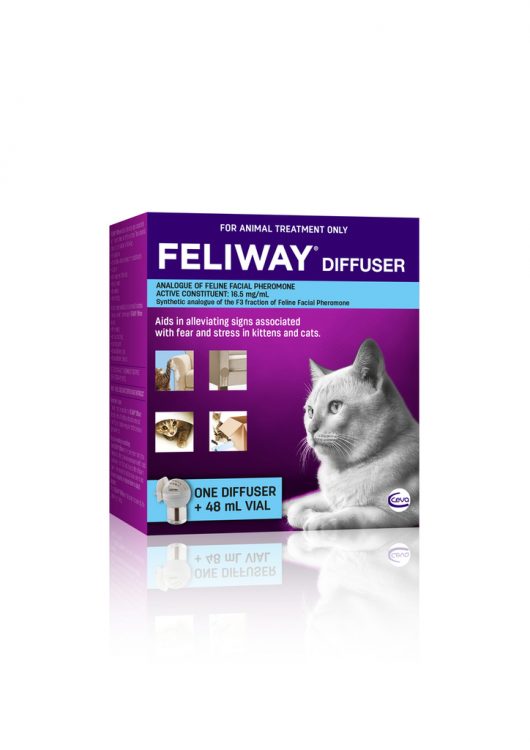
  • Use of synthetic feline pheromones like 'Feliway', in the household and carrier a day before or day of the veterinary visit should provide a calming effect.
  • Keep the carrier warm, covered by a towel or blanket, and quiet in the vehicle. Reduce stress from loud noises, bright lights, strange smells, and rapid changes in environment.
  • The bottom of the carrier should have a blanket or towel for cushioning, as well as a pee pad, absorbable material, or raised carrier grate to reduce the chance of soilage.
  • Whether your kitty is transported by a car or another mode of transport, it is important to keep driving steady and even, take shorter routes. The temperature inside the car should reflect the cat's needs. Strong smells should be avoided along with loud noises, i.e radios or music unless cat-specific.
  • One of our vets may recommend calmative or sedative medications for your cat to reduce stress. Our team will provide information regarding the use of medications prior to a visit.

"Cats are a predatory and prey species with unique resource and territory needs that are easily disrupted by events such as veterinary visits. Disruptions increase protective emotions in the cat, leading to negative behavioral outcomes during the visit."

"Stressor stacking describes the cumulative stress resulting from numerous disruptions to the cat’s routine and territory in preparation for the veterinary visit. These cumulative changes increase fear-anxiety and frustration, predisposing to negative behavioral outcomes during the veterinary visit. Adapted from International Cat Care." Kelly St. Denis, MSc, DVM, DABVP (Feline Practice), 'From the Cat’s Point of View: Creating a Cat-Friendly Veterinary Environment' Issue: March/April 2024. https://todaysveterinarypractice.com/behavior/creating-a-cat-friendly-veterinary-environment/

Once in the clinic, our customer service team will greet you and usher you to our 'cat parking stations' which are up from the ground. We have Feliway spray and blanket covers at your convenience. 

senior

Senior Cats

Exactly what kind of preventive care does my old cat need?

Read More
kitten

Kittens

How do I look after my new kitten?

Read More
dental

Dental

How do I care for my cats teeth?

Read More

A tranquil haven for cats and their carers staffed by experienced cat loving professionals.


Dietary History

Please fill this form in if you have made an appointment for your cat to see us. If you are bringing more than one cat please fill out and submit a form for each of them. Thank you.


    OverweightIdeal weightUnderweight


    IndoorsOutdoorsIndoors & Outdoors


    Very activeModerately activeSleeps all day

    reCaptcha v2 in use. See Terms of Service and Privacy Policy here.

    reCAPTCHA V3

    24 October 2017
    chubby cat walking down path

    Cats as our companions

    Ever wondered why cats consented to live with humans? While they have not been domesticated for as long as dogs they have been sharing our households for thousands of years. The Egyptians were not the first to take them into their homes. They were just the first to decorate their homes, temples and tombs with depictions of them so ensuring their favourites endured for eternity. African wildcats moved into farming settlements to control pests in stored grain. When vermin were in short supply the cats relied on humans to supply their meals. The cats that survived combined good hunting ability with the ability to reward people with their company. As time went on these cats extended their feline family bonds to include humans and humans reciprocated taking the most tractable and attractive onto their hearths. However, cats retain all the features that make them good hunters. Their displays of emotion are muted. They are not going to shout out if they find something tasty to eat or a comfortable bed. They regard other cats as rivals for food and other resources. Cats are also not going to show fear or pain if a predator or a rival cat is around. This makes it very hard for you to tell when your cat is not well. It is thought that the purr evolved as a signal from kittens to their mothers to make her stay with them. They are saying “please settle down next to me” in the most inviting way they know.
    21 October 2017

    Feliway calms your cat

    Feliway is a copy of the pheromone that cats naturally rub around their environment to make them feel comfortable. It is odourless to us - but a potent calmer for cats. Every time a cat rubs the side of its face against objects in the home, it leaves behind a pheromone to mark its territory. This pheromone helps them feel at home and happy. Changes in and around your home can upset your cats and prevent them from following their normal routine of rubbing this pheromone around their area. They then feel less secure, and become stressed. Activities such as redecorating, moving the furniture, having guests or tradesmen in, going to the cattery and moving home remove these natural pheromones from around the cat and cause stress. Any change in your home organisation and schedule disturbs your cat, for example: a newborn baby, toddler or a new partner, a new work roster. Cats are very sensitive to routine and crave a stable environment. A stressed cat may hide, scratch furniture, urinate outside the litter box, spray the curtains or become aggressive to other cats in the household. Feliway helps maintain the scent that gives your cat a feeling of peace and calm, and reduces the stress that your cat is experiencing.
    20 October 2017
    large white cat with golden eyes

    How cats see the world

    This is part 1 of the text of the talk given at our 2017 client night. Watch out for future installments. Cats’ senses are very different to ours because they evolved as hunters and retained these characteristics even after they came to live with us. Cats are descended from the African wild cat, which are ambush hunters of rodents, frogs, reptiles, and birds, but potential prey for larger animals. Our cats’ senses are unaltered from those of the wild cat. All that has changed in their brains is the ability to form social attachments to people Cats eyes are suited to hunting at night. The large cornea allows light to enter the eye and the reflective layer under the retina maximises light sensitivity. This high light sensitivity would be painful in broad daylight so their pupils contract to a slit and their eyelids close to protect the retina in the day. They have no need for colour vision at night and so see yellow and blue but not red and green. Size, pattern and shape of prey are more important to them. The most critical aspect of vision in cats is that it is best from 2-6 metres away. This makes it difficult for them to take treats from our hands. However like us they have binocular vision, which enables them to judge the distance to prey, and to climb and jump accurately. Their eyes are acutely sensitive to minute movements – like the twitch of a mouse’s whisker.
    20 October 2017

    Training cats and other smorgasbords

    An eager crowd heard Dr Georgia talk last night on training cats - before they train us. Earlier Dr Kate spoke on how cats perceive their environment, surprising all with the sharpness of cats' hearing, smell and vision in poor light. A supper of delicious sandwiches and wraps kept energy levels and interest up and everyone went home with gifts for the felines in their lives and renewed interest in their cats' behaviour. The text of the talks will appear here shortly.
    13 October 2017

    Indoor cat cat health and happiness

    Dr Kate and Dr Georgia were recently interviewed about the problems indoor cats encounter
    7 October 2017

    Does my cat need worming?

    5 October 2017

    Safe flea products for cats

    3 October 2017

    Information night October 19th

    Our information night this year centres on how cats perceive the world - and how you can harness this when integrating your kitten or cat into your household. Secure your place at our popular annual information night. Phone us on 6251 1444 or email us as soon as possible.
    28 September 2017

    Does my cat need worming?

    All cats are exposed to roundworm sometime in their lives. Queens pass the larvae to their kittens in the milk and cats who hunt - and let's face it all cats are hunters - ingest them in that delicious worm, snail or mouse. Tapeworm is also found in hunters and also in cats who are fed raw meat. The flea tapeworm is the most common worm in Australian cats. Cats ingest tapeworm infected fleas during grooming. At Canberra Cat Vet we recommend deworming of all cats, even if confined indoors, every 3 months and effective flea control if fleas have been found on your cat or in its environment. Profender is an easy to apply spot-on worm control. If your cat also has fleas then Revolution or Advocate treat both fleas and worms. Milbemax is a very small worm tablet that many people find easy to administer. Canberra Cat Vet carries Activyl and Advantage, both excellent flea control spot-ons. We also have Seresto, a new flea control collar that keeps flea numbers down for 8 months.