Visiting Us?

Here are some great tips we advise to prepare yourself and your kitty cat for their visit with us.

  • Acclimate your pet to the carrier. Approach this by bringing the carrier into the home a couple of weeks prior or permanently, leaving the door open or the lid removed. Offer bedding, play, encouragement, and treats to create positive interactions and a good overall experience.
  • Use of synthetic feline pheromones like 'Feliway', in the household and carrier a day before or day of the veterinary visit should provide a calming effect.
  • Keep the carrier warm, covered by a towel or blanket, and quiet in the vehicle. Reduce stress from loud noises, bright lights, strange smells, and rapid changes in environment.
  • The bottom of the carrier should have a blanket or towel for cushioning, as well as a pee pad, absorbable material, or raised carrier grate to reduce the chance of soilage.
  • Whether your kitty is transported by a car or another mode of transport, it is important to keep driving steady and even, take shorter routes. The temperature inside the car should reflect the cat's needs. Strong smells should be avoided along with loud noises, i.e radios or music unless cat-specific.
  • One of our vets may recommend calmative or sedative medications for your cat to reduce stress. Our team will provide information regarding the use of medications prior to a visit.

"Cats are a predatory and prey species with unique resource and territory needs that are easily disrupted by events such as veterinary visits. Disruptions increase protective emotions in the cat, leading to negative behavioral outcomes during the visit."

"Stressor stacking describes the cumulative stress resulting from numerous disruptions to the cat’s routine and territory in preparation for the veterinary visit. These cumulative changes increase fear-anxiety and frustration, predisposing to negative behavioral outcomes during the veterinary visit. Adapted from International Cat Care." Kelly St. Denis, MSc, DVM, DABVP (Feline Practice), 'From the Cat’s Point of View: Creating a Cat-Friendly Veterinary Environment' Issue: March/April 2024. https://todaysveterinarypractice.com/behavior/creating-a-cat-friendly-veterinary-environment/

Once in the clinic, our customer service team will greet you and usher you to our 'cat parking stations' which are up from the ground. We have Feliway spray and blanket covers at your convenience. 

senior

Senior Cats

Exactly what kind of preventive care does my old cat need?

Read More
kitten

Kittens

How do I look after my new kitten?

Read More
dental

Dental

How do I care for my cats teeth?

Read More

A tranquil haven for cats and their carers staffed by experienced cat loving professionals.


Dietary History

Please fill this form in if you have made an appointment for your cat to see us. If you are bringing more than one cat please fill out and submit a form for each of them. Thank you.


    OverweightIdeal weightUnderweight


    IndoorsOutdoorsIndoors & Outdoors


    Very activeModerately activeSleeps all day

    reCaptcha v2 in use. See Terms of Service and Privacy Policy here.

    reCAPTCHA V3

    2 June 2017

    Sudden blindness?

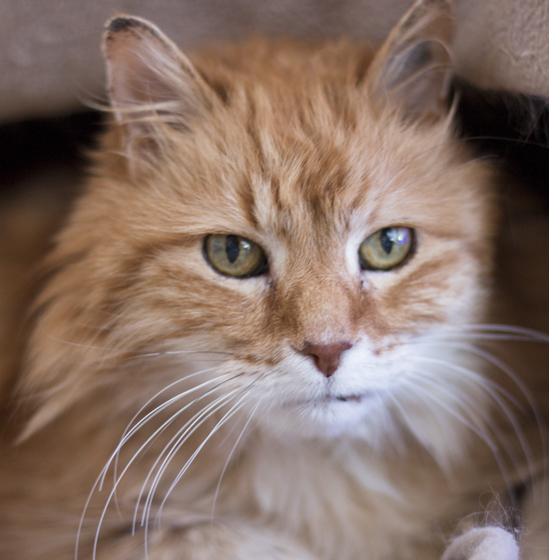
    The most common cause of sudden blindness in cats is high blood pressure. Some cats with high blood pressure, also known as hypertension, may appear to have headaches. They keep to themselves, are a bit crabby or stare into space. Older cats, especially if they have kidney disease or hyperthyroidism, may develop high blood pressure. If hypertension is not controlled the blood vessels at the back of the eye may burst causing instant blindness. More insidiously any existing heart or kidney disease worsens, and vascular dementia develops. We routinely check the blood pressure of cats older than 10 years of age with a machine that amplifies the sound of their pulse, but is otherwise very similar to the device used on humans. Most cats are like the old chum above, happy and reasonably relaxed - as long as their person is close by. Treatment is relatively simple and effective. Many cats even regain their sight.
    4 May 2017
    Old cat resting

    Old cats need extra care

    Our cats don't give us much warning when they are not healthy. They hide arthritis until they can barely move. Kidney, gut and liver disease creep up on them. Hypertension is a silent killer, just as in humans. As our cats age they need more frequent assessments and a deeper probe into their health. We have a package for cats older than 10 years which picks up the major and most common disease threats. Canberra Cat Vet is offering NEW CLIENTS with a cat 10 years or older, and clients with cats who have just reached 10 years of age $15 OFF your next bag of Hills dry cat food! This offer is available until the end of June 2017 when you book in a Senior Health Check for your senior feline companion. A Senior Health Check for your cat may include, but is not limited to the following: full clinical examination, vaccination review, dental assessment, diet assessment, medication review, blood testing, urine examination, blood pressure and mobility assessments. Your cats health and happiness depend on regular veterinary assessments. Call us on 6251 1444 or make an online appointment on the "Request an Appointment" button above.
    2 March 2017

    Enteritis outbreak – check your cats’ vaccination record

    Since the 1970’s, vigilant use of feline core vaccines has resulted in strong herd immunity against feline enteritis (FPV), also known as panleukopaenia, caused by a parvovirus. Cases of the virus, which causes fevers, vomiting and dreadful diarrhoea, were almost unheard of. However, there has been a re-emergence of the potentially fatal enteritis over the last few years, with three outbreaks in Victoria between 2013 and 2015 claiming the lives of around 200 cats. Over the last month, shelter-based outbreaks of the disease have been reported in both New South Wales and Queensland, including Blacktown Pound in Sydney’s west. At another shelter the infection claimed the lives of five out of seven cats in one litter, before the virus was identified, enabling appropriate treatment of the other two kittens. The most common form of FPV is the acute form, which presents as a three to four day history of fever, depression and anorexia, progressing to vomiting and diarrhoea. Severe clinical illness leading to mortality is much more common in young, inadequately vaccinated kittens three to five months of age. The key to disease control is still mass vaccination. “Disease in cats is caused by parvoviruses, small DNA viruses. The main one is feline panleucopenia virus but parvoviruses that infect dogs can also cause the disease in cats” Professor Vanessa Barrs, Specialist in Feline Medicine told media publications. When less than 70 per cent of the population is vaccinated, the situation is perfect for the emergence of a disease epidemic, she said. The current outbreak is a timely reminder that maintaining immunity in populations of animals where effective vaccines are available is essential. If you are unsure of your cats' vaccination status please phone us on 6251 1444 and we will check our records for you. Cats less than 12 months of age are most vulnerable and must have had an F3 booster after 12 weeks of age to be fully protected.
    13 February 2017

    Time to say goodbye?

    Last week we had to make a hard decision for our much loved clinic cat Oliver. He had multiple problems - diabetes, hyperthyroidism, kidney disease, inflammatory bowel disease - and despite our best efforts was fading away to nothing. He has lived at Canberra Cat Vet since almost the day we opened as his owner went into hospital and passed away while he was staying with us. For the last year he has been faithfully medicated and cared for by his staff. However, we discovered that he had a liver mass recently and although he was still as bright as a button and ordering us around as usual, he lost weight rapidly. His kidneys were also deteriorating and he required fluids under the skin every second day - which he hated. Some days he ate well and some days he didn't. Some days he came out of his office to check the hospital was running smoothly and others he stayed on his bed(s) all day. His litter tray was a mess some days and empty others. Just as we would decide that he wasn't enjoying life he would spark up again. We had to ask ourselves the hard questions: Was he having more good days than bad? Was his appetite stable and was he enjoying his meals? Was he responding to us and his surroundings as much as he had just a few months before? Would he tolerate yet more treatment for his kidney disease? Was he staying in his familiar places or moving to unusual places - or was he not moving a lot at all? Was he crying a lot - or quieter than normal? Was he using the litterbox, missing it or soiling his beds? Was he losing weight more rapidly than expected in an elderly cat? How much enjoyment was he really getting out of life? The clincher for Ollie was the regular kidney treatment - he hated being interfered with at the best of times. And he had lost over a kilogram of weight in the last 6 months, despite Nurse Leanne's intensive feeding regime. All of his staff eventually agreed that it was time for Ollie to go. We gathered around him on his favourite bed, and purring loudly, he slid off into a happier hunting ground.
    19 January 2017

    Unexplained weight loss

    Weight loss in cats is a sensitive indicator of many feline diseases. Because cats don't give us many clues when they are ill we take unexpected weight loss very seriously. If a cat loses weight over a day or so then dehydration from a more rapid onset illness, pancreatitis or a gastrointestinal upset is more likely. We should correct the dehydration as soon as possible so don't hesitate to call us for advice or an appointment. Even if your cat seems otherwise well and happy, weight loss over a month or more could be due to diseases such as hyperthyroidism, kidney disease, diabetes, inflammatory bowel disease or cancer. It is only when these diseases are well advanced that a cat will finally show obvious signs. When your cats come in for a regular exam the first thing we do is weigh them. We take weight loss very seriously and if you haven't been intentionally dieting them we will recommend tests. Hyperthyroidism, diabetes and kidney disease are detected with tests we do in our own laboratory. Results are available within half an hour. If we don't find anything then we discuss the possibility of bowel disease or other more unusual diseases. It is always better to detect and manage disease earlier rather than later. Cats often have chronic ongoing disease. With good management we can improve their quality of life and ensure they live a good long life with you.
    19 January 2017

    The unwell cat

    Cats often don't give us many clues that they are ill. Perhaps they miss a meal or hide in the cupboard. Perhaps they look for a cuddle; or perhaps they want nothing to do with you. Some will vomit or have diarrhoea. The occasional one will show pain by hunching over or curling up and wanting to be left alone. Many of these vaguely ill cats have pancreatitis, a painful inflammation of the pancreas. The pain and nausea put them off their food. As cats obtain most of their fluids through their food rather than from what they drink they become dehydrated very quickly. The dehydration exacerbates the pain and nausea and so a vicious downward spiral continues. Fortunately most respond to a drip to rehydrate them, and pain relief and anti-nausea medication. Within 2 or 3 days they are back to their normal selves. Pancreatitis is a very common complaint in middle-aged to older cats. If your cat doesn't seem to be her or himself call us sooner rather than later as cats often suffer pancreatitis silently.
    5 January 2017

    Online appointment booking

    This week we launched an online booking system. You can make an appointment with us on your mobile, tablet or computer. Look at the top of our webpage for the "Request An Appointment" button. You will find it right under the address and hours. Once you click on it you will be taken to a registration page. You will only have to register once. Choose the type of appointment you want and the time most convenient to you. You will then receive an email. Please continue to call us on 6251 1444 if your cat is ill and needs to be seen on the same day or if you are not sure how urgent your cat's problem is. Cats are very good at hiding how sick they are so if you have any doubts please discuss it with us on the phone.
    30 December 2016

    New Year’s Eve terrors

    New Year's Eve is a time of anxiety for many cats. Flashing lights, crashing and clapping fireworks send them into the cupboard or over the fence. With just a few practical changes at home around the time of fireworks, your cat should feel much more calm and relaxed. Here are 10 top tips to ensure your cat's New Year's Eve doesn't go off with a bang: If your cat hides on top of cupboards or under furniture, leave him alone and do not try to coax him out. This 'bolthole' is where he will feel most secure. It is important that your pet can access his favourite bolthole at all times On New Year's Eve, make sure your cat is safely inside and the doors, windows and cat flaps are closed. Plug a Feliway diffuser in the room where the cat spends most of his time 48 hours before the festivities begin. Make sure your cat is microchipped so that if he escapes he can be easily identified and returned to you. Provide your cat with a litter tray Draw the curtains to reduce noise from outside and play music or have the TV on to mask the noise of fireworks Ignore any fearful behaviour and do not try to comfort your cat. More importantly, do not try to pick him up or restrain him. Fearful cats prefer to be left to cope on their own. Try not to go out during the fireworks. . Stay calm and act normally In multi-cat households intercat tensions may rise. Feliway and multiple hiding places will help avoid disharmony If you are worried that your cat is taking a long time to recover from the festivities call us.
    28 December 2016

    Sun sense

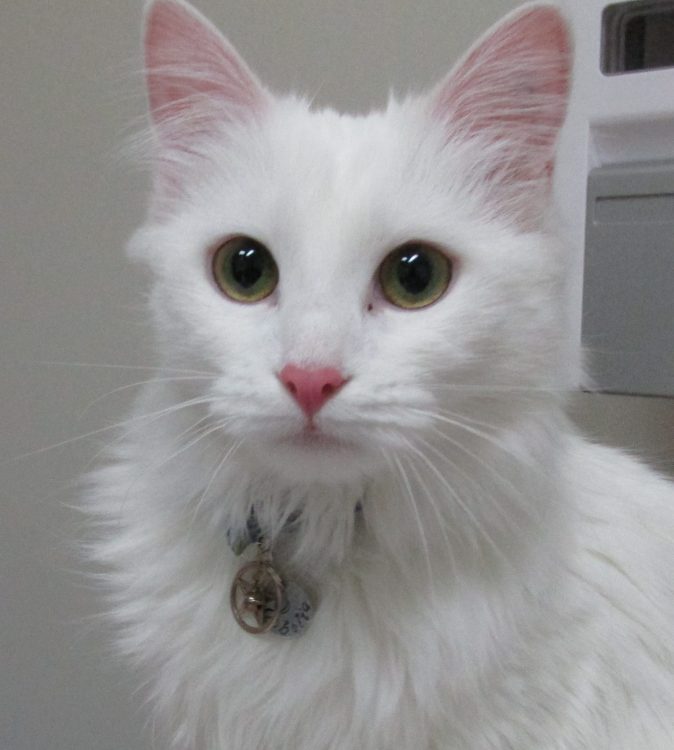
    Like pale-skinned humans, white cats or cats with white ears and/or noses are very susceptible to sun damage and skin cancers. Sunburn of the ears looks much the same as it does on us – red and flaky skin. After several years of sun exposure the ears curl and bleeding sores develop. Pale pink noses ulcerate and scab in the sun. If the ulcer penetrates the cartilage under the skin layers the skin cancer is very hard to eradicate. Prevention is far better than cure. Keep your white cat indoors out of the sun, especially in summer between 9am and 4pm when the most intense UV rays beat down. If sun exposure is unavoidable apply a waterproof, high SPF sunscreen labelled as safe for babies to the ears and hairless areas. It should be applied at least 10-15 minutes before your cat goes outside. The nose is difficult to protect but don’t be tempted to apply a zinc based sunblock product as the zinc could poison your cat. Tattooing does not work because the ink is deposited in the dermis, the layer below the one affected by the sun. If you notice any ulceration or scabbing of your cats’ nose or ears bring them in early to see us to prevent the cancer spreading to the cartilage under the skin.