Visiting Us?

Here are some great tips we advise to prepare yourself and your kitty cat for their visit with us.

  • Acclimate your pet to the carrier. Approach this by bringing the carrier into the home a couple of weeks prior or permanently, leaving the door open or the lid removed. Offer bedding, play, encouragement, and treats to create positive interactions and a good overall experience.
  • Use of synthetic feline pheromones like 'Feliway', in the household and carrier a day before or day of the veterinary visit should provide a calming effect.
  • Keep the carrier warm, covered by a towel or blanket, and quiet in the vehicle. Reduce stress from loud noises, bright lights, strange smells, and rapid changes in environment.
  • The bottom of the carrier should have a blanket or towel for cushioning, as well as a pee pad, absorbable material, or raised carrier grate to reduce the chance of soilage.
  • Whether your kitty is transported by a car or another mode of transport, it is important to keep driving steady and even, take shorter routes. The temperature inside the car should reflect the cat's needs. Strong smells should be avoided along with loud noises, i.e radios or music unless cat-specific.
  • One of our vets may recommend calmative or sedative medications for your cat to reduce stress. Our team will provide information regarding the use of medications prior to a visit.

"Cats are a predatory and prey species with unique resource and territory needs that are easily disrupted by events such as veterinary visits. Disruptions increase protective emotions in the cat, leading to negative behavioral outcomes during the visit."

"Stressor stacking describes the cumulative stress resulting from numerous disruptions to the cat’s routine and territory in preparation for the veterinary visit. These cumulative changes increase fear-anxiety and frustration, predisposing to negative behavioral outcomes during the veterinary visit. Adapted from International Cat Care." Kelly St. Denis, MSc, DVM, DABVP (Feline Practice), 'From the Cat’s Point of View: Creating a Cat-Friendly Veterinary Environment' Issue: March/April 2024. https://todaysveterinarypractice.com/behavior/creating-a-cat-friendly-veterinary-environment/

Once in the clinic, our customer service team will greet you and usher you to our 'cat parking stations' which are up from the ground. We have Feliway spray and blanket covers at your convenience. 

senior

Senior Cats

Exactly what kind of preventive care does my old cat need?

Read More
kitten

Kittens

How do I look after my new kitten?

Read More
dental

Dental

How do I care for my cats teeth?

Read More

A tranquil haven for cats and their carers staffed by experienced cat loving professionals.


Dietary History

Please fill this form in if you have made an appointment for your cat to see us. If you are bringing more than one cat please fill out and submit a form for each of them. Thank you.


    OverweightIdeal weightUnderweight


    IndoorsOutdoorsIndoors & Outdoors


    Very activeModerately activeSleeps all day

    reCaptcha v2 in use. See Terms of Service and Privacy Policy here.

    reCAPTCHA V3

    1 August 2015

    How to pet or massage your cat

    31 July 2015

    Kitten attack

    Don't let your kitten attack your hands and feet - one day he or she will be a big cat and it won't be such a fun game...
    30 July 2015

    High Blood Pressure

    High Blood Pressure can cause blindness in cats; have you had your senior cat’s blood pressure taken lately? Systemic hypertension – a persistent increase in blood pressure – is commonly recognized in feline practice. Feline hypertension is commonly found as a complication of other underlying medical conditions (secondary hypertension), although primary hypertension (hypertension without any underlying disease) may also be seen in cats. In contrast to people, where primary hypertension (also called essential hypertension) is most common, secondary hypertension is more common in cats. Primary hypertension accounts of less than 20% of feline cases. The most common secondary causes of hypertension are chronic kidney disease (CKD) and hyperthyroidism. Other causes include hyperaldosteronism (Conn’s syndrome), chronic blood loss adrenal tumours and erythropoietin therapy Unfortunately hypertension is often only suspected very late in the course. The target organs most vulnerable to hypertensive damage are the brain (usually behavioural, night vocalization, signs of dementia), heart, kidneys and eyes (blindness). The goal of managing high blood pressure is to identify and treat underlying causes, and to reduce systemic blood pressure to an ideal range with anti-hypertensive medications. Blood pressure should be evaluated as a routine part of check-ups for all cats past 7 years of age. We can help measure your feline friend’s blood pressure with a Doppler machine at their next visit for their wellness check.
    22 July 2015

    Scratch that!

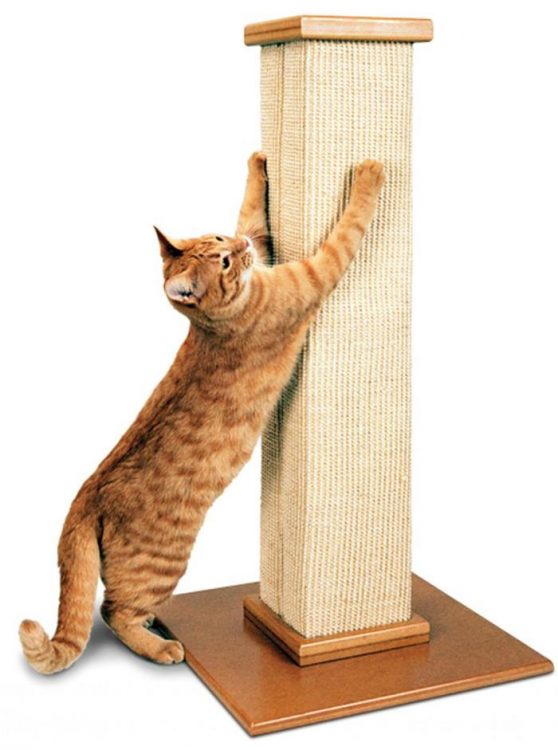
    Some tips on picking an appropriate scratching post: Pick the right post. Think about the places your cat scratches now. What’s her preferred material? Scout out posts and coverings that mimic her favorite scratching surfaces. Choose from sisal, cardboard, carpet wood or leather. How high? Does your cat stretch high and far above his head? Most cats like higher posts they can stretch right out on. Just be sure it’s sturdy so it won’t wibble, wobble or fall while your cat is scratching. Location matters. Just like real estate, where you place your scratching board counts. Your kitty craves your attention, so it’s best to post her post in highly trafficked areas, where the family spends time together. This way her kitty “furniture” is on the scene, close to you—the one she loves best! Some cats stretch and scratch right after they wake up. If this is your puss place the scratching post close to favourite sleeping areas. Structure matters. Does your kitty crave vertical scratching surfaces or horizontal ones? Some cats will enjoy a mix of both.
    18 June 2015

    Playing or Fighting?

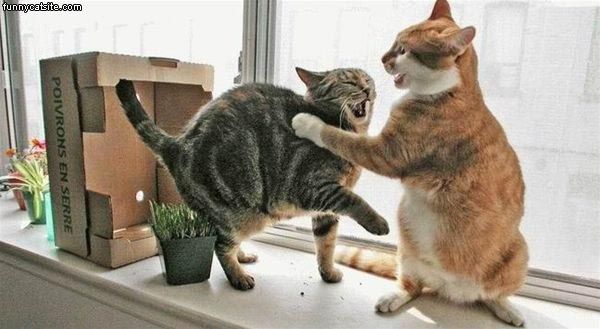
    It can be difficult to tell the difference sometimes between cat play or fighting. The following are a few general guidelines to help you determine which is which: Play fighting is often silent - no yowling or screaming should be present in play. Cats who play with one another tend to take turns in the offensive and defensive postures. While engaged in fighting, there’s usually no role reversal. The biting is gentle and causes no injury or pain to the recipient and the claws are usually retracted. There is no reason to break a play fight if it continues at this level. When cats are playing, they may each hiss once or twice, but if your cats hiss several times, most likely they are fighting. Cats should not get hurt during play, unless it’s by accident. Cats fighting may give or receive bite or scratch wounds. When your cats are done playing there will be a rapid recovery to normal and no obvious tension between the pair. They should be acting normally with each other, not avoiding each other. After fighting, one or both of the cats will tend to stay out of each others way. If you have cats who don’t tend to get along with each other and they look like they’re playing, they may actually be fighting. If you are not sure, try to distract them with a positive noise, like the can opener or shaking the treat box. Be sure to keep it positive; you don’t want to discourage a possible friendship if they really are playing.
    2 June 2015

    My kitten has diarrhoea…

    Many kittens develop diarrhoea especially in the first week or two in their new homes. Often it is due to the big changes in their lives - a new family, leaving mum, new surroundings, but most often it is because of the new diet. Even good quality kitten food causes diarrhoea in a kitten that is not used to it. Find out what the breeder or foster carer fed your kitten and feed some of the new food mixed in with some of the old food. Gradually increase the proportion of the new food over a couple of weeks. Kittens lose the enzyme for digesting milk very quickly so avoid dairy products. Kitten foods contain all the calcium and protein that a kitten requires. Check when the kitten was last wormed. Worm young kittens every 2 weeks until they are 12 weeks old to avoid diarrhoea from worms. If your kitten develops diarrhoea switch to just cooked white chicken for a couple of meals and deworm with a reputable wormer like Milbemax. Do not use a wormer based on piperazine. If the faeces does not firm up within 24 hours or your kitten is lethargic, vomiting or not eating consult a vet immediately. Kittens quickly dehydrate and become very ill because of fluid loss. More serious causes of diarrhoea include enteritis (also known as panleukopenia), giardia, coccidia, cryptosporidium, trichomonas,clostridia, salmonella and campylobacter. Take a sample of the diarrhoea to your vet so that we can check for them if necessary.
    2 June 2015
    large white cat with golden eyes

    Dental program

    Canberra Cat Vet has launched a new dental program to catch dental disease in the early stages. Dental disease prevention in cats is a high priority for us because cats rarely show us the full extent of the pain and discomfort they suffer because of tartar on their teeth and gum disease. It is only after we have treated the dental disease and our cats return to their playful, happy former selves that we realise how much pain they were in. Cats enrolled in the dental program receive: A free dental check up every 6 months Advice on minimising plaque and tartar buildup A discounted scale and polish if we find your cat has early stage dental disease You can enroll your cat in the program at the annual check up or vaccination, or just phone for an appointment for a free dental check at any time on 6251 1444. Smokey has a lot of tartar on his molars, infected gums and osteomyelitis. This is what Canberra Cat Vet's dental program wants to prevent!
    8 January 2015

    Runny noses

    Macey doesn't like sneezing one little bit! Snuffles, sneezing, noisy breathing, snoring and nasal discharge are signs of nasal and sinus disease. In young cats the flu viruses – feline herpesvirus and calicivirus – are the most common cause. These viruses damage the nasal mucosa and then bacteria infect the nasal passages causing a pussy discharge and a loss of appetite. In some cats this leads to chronic or lifetime infection of the fine bones within the nose and sinuses. Young to middle age cats sometimes acquire fungal infections like cryptococcosis and aspergillosis if they spend a lot of time outdoors. Inflammatory polyps at the back of the nose in the nasal part of the throat cause snuffles and snoring in some cats. Physical damage from foreign objects in the nose like grass seeds, cat bites or car accidents, or associated with severe dental disease will cause snuffles and nasal discharge in any age cat. More seriously, some cats develop tumours in the nasal passages or extending from other areas into the nose. What tests can be done to find the cause of the disease? We first do non-invasive tests, such as a blood test for cryptococcosis, a blood count, biochemistry or tests for feline Leukaemia virus and FIV. Then we consider a general anaesthetic to X-ray the nose and examine the nose, throat and mouth. We take samples and look for bacteria, fungi, evidence of inflammation or cancer cells. If the teeth and gums are diseased a dental treatment often resolves the problem. We can control but not cure chronic bacterial rhinitis because the chronically damaged bones cannot be repaired. Antibiotics reduce secondary bacterial infection and steam inhalation in a steamy bathroom or from a vaporiser helps clear the passages. The most essential aspect of treatment is good nursing care: keeping the cat’s face clean and clear of discharge, and stimulating the appetite with warm, strong smelling foods. Other diseases require specific treatments. We remove polyps surgically, treat fungal diseases with antifungal drugs and control some cancers with chemotherapy.
    18 December 2014
    ginger cat

    Canberra Cat Vet’s Holiday Opening Hours

    Christmas Eve: 8.30am - 2.30pm Christmas Day: Closed Boxing Day: Closed 27th December: 8.30am - 12.30pm 28th December (Sunday): Closed 29th December: 8.30am - 5.30pm 30th December: 8.30am - 5.30pm 31st December: 8.30am - 5.30pm New Year's Day: Closed If you have an emergency and we are closed, phone the Animal Emergency Centre on 6280 6344 Merry Christmas from Ollie and all at Canberra Cat Vet!