Visiting Us?

Here are some great tips we advise to prepare yourself and your kitty cat for their visit with us.

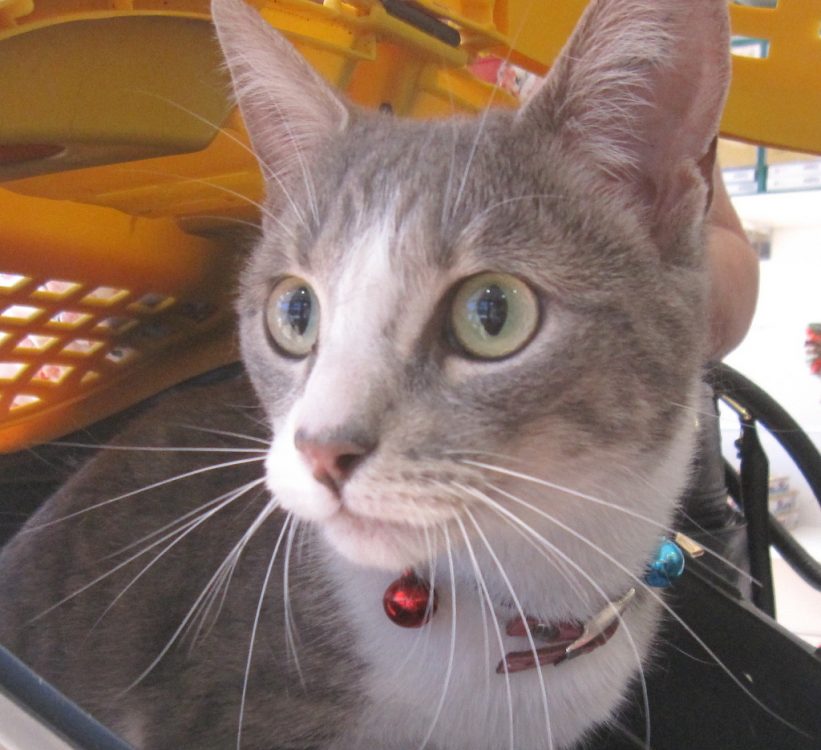
  • Acclimate your pet to the carrier. Approach this by bringing the carrier into the home a couple of weeks prior or permanently, leaving the door open or the lid removed. Offer bedding, play, encouragement, and treats to create positive interactions and a good overall experience.
  • Use of synthetic feline pheromones like 'Feliway', in the household and carrier a day before or day of the veterinary visit should provide a calming effect.
  • Keep the carrier warm, covered by a towel or blanket, and quiet in the vehicle. Reduce stress from loud noises, bright lights, strange smells, and rapid changes in environment.
  • The bottom of the carrier should have a blanket or towel for cushioning, as well as a pee pad, absorbable material, or raised carrier grate to reduce the chance of soilage.
  • Whether your kitty is transported by a car or another mode of transport, it is important to keep driving steady and even, take shorter routes. The temperature inside the car should reflect the cat's needs. Strong smells should be avoided along with loud noises, i.e radios or music unless cat-specific.
  • One of our vets may recommend calmative or sedative medications for your cat to reduce stress. Our team will provide information regarding the use of medications prior to a visit.

"Cats are a predatory and prey species with unique resource and territory needs that are easily disrupted by events such as veterinary visits. Disruptions increase protective emotions in the cat, leading to negative behavioral outcomes during the visit."

"Stressor stacking describes the cumulative stress resulting from numerous disruptions to the cat’s routine and territory in preparation for the veterinary visit. These cumulative changes increase fear-anxiety and frustration, predisposing to negative behavioral outcomes during the veterinary visit. Adapted from International Cat Care." Kelly St. Denis, MSc, DVM, DABVP (Feline Practice), 'From the Cat’s Point of View: Creating a Cat-Friendly Veterinary Environment' Issue: March/April 2024. https://todaysveterinarypractice.com/behavior/creating-a-cat-friendly-veterinary-environment/

Once in the clinic, our customer service team will greet you and usher you to our 'cat parking stations' which are up from the ground. We have Feliway spray and blanket covers at your convenience. 

senior

Senior Cats

Exactly what kind of preventive care does my old cat need?

Read More
kitten

Kittens

How do I look after my new kitten?

Read More
dental

Dental

How do I care for my cats teeth?

Read More

A tranquil haven for cats and their carers staffed by experienced cat loving professionals.


Dietary History

Please fill this form in if you have made an appointment for your cat to see us. If you are bringing more than one cat please fill out and submit a form for each of them. Thank you.


    OverweightIdeal weightUnderweight


    IndoorsOutdoorsIndoors & Outdoors


    Very activeModerately activeSleeps all day

    reCaptcha v2 in use. See Terms of Service and Privacy Policy here.

    reCAPTCHA V3

    9 February 2014

    How to pill a cat

    This is an excellent video on tableting a cat. Note how the assistant holds those front legs from behind and how the pill giver holds the head vertically. One thing they miss telling us is that it is important that the cat has a drink or food to wash the pill down. I squeeze a wet cotton ball straight into the cat's mouth after dropping the pill in or give a treat.
    9 February 2014

    Living with allergies AND cats

    Do you suffer wheezing, sneezing, watery eyes and itchy eyes and arms around your cat? For me, these allergy symptoms are a small price to pay for the company of my cats – although some mornings when I wake with a heavy head and red eyes I wonder! Cat allergies are not caused by cat hair as most of us assume. They are caused by a protein found in cat saliva, urine and skin cells, or dander. The immune systems of people with allergies mistake this harmless protein for a dangerous invader like a virus or bacteria and mount a full scale attack on it. Here are some tips for minimising our allergy symptoms without giving up our cats. Made your bedroom a cat free zone Reduce the load of cat allergens in your bedroom by washing or replacing bedding, curtains and pillows. Then cover pillows and mattress with allergen-proof covers. Open windows wide at least once a day to air the house and dilute the allergen load. Send your cat outside, preferably into an outdoor run, to disperse some of the dander Eliminate allergen traps such as carpet, rugs and upholstered furniture as you can. Carpet accumulates up to 100 times more allergens than vinyl or wood flooring. If you can’t take it up steam clean it regularly and vacuum with a high efficiency particulate arresting (HEPA) filter or us and allergen-proof vacuum cleaner bag. Brush your cat outside and/or in an outside enclosure to minimise contamination of your home with dander. Wipe the dander away with a moist cloth or wipe to remove saliva and dander. Spray the house with anti-allergen sprays Use a low dust cat litter and ask non-allergic family members to clean the litter box frequently Take the anti histamines, decongestants, eye drops and aerosol inhalers your doctor recommends. Antioxidants such as Vitamins C and E also have anti-allergen effects.
    9 February 2014

    Does my cat need an annual checkup?

    Because cats are so good at hiding illness and discomfort it is imperative that they have a check-up at least once a year. Cats older than 9 years of age may need a physical twice a year especially if we identify any problems. During the examination we check their eyes, mouth, teeth, ears, heart, lungs, skin, joints and belly for any abnormalities. Many cats start having dental problems as early as 3 years old. Skin disease, allergies and gut upsets an happen at any age. We discuss the optimal diet for your particular cat because every cat is an individual. Behavioural problems like inappropriate urination, yowling or attacking often come up in discussion, too. If your cat is likely to go into boarding or other stressful situations then we recommend an annual vaccination for enteritis (also known as panleukopenia or parvovirus) and the two flu viruses (calicivirus and herpesvirus). This vaccine is also known as the F3 or 3 in 1 vaccination. Inside cats who don't go into boarding may need less frequent F3 vaccination. Cats who go outdoors or who may escape home, particularly if they fight, require an FIV vaccination against feline AIDS every year. It is important that cats receive the FIV vaccine boosters exactly 12 months apart. We also give or recommend the best worming and flea treatments for your cat during the annual visit.
    9 February 2014

    Cats get arthritis too!

    Sixteen year old Burmese Cleo was slow to jump down off the kitchen bench when caught out last week. She poured herself down the side, landed with a thud and looked stunned for a moment before moving off. When we X-rayed her elbows we were horrified to find that she had severe osteoarthritis. She had been covering it up - as cats do - for a long time before we noticed she was having trouble. We then noticed that she is also reluctant to jump very high. She uses chairs to get onto tables and has stopped leaping up to sit in the sun on the windowsill. Her painful knees make her hesitate before jumping and she then scrambles up rather than jumping. Unwilling to miss the electric blanket at night she pulls herself up on to the bed. We've set up boxes as steps onto her feed bench and the bed. We also play gently with her by trailing ribbons and batting balls to strengthen her muscles. To reduce the strain on her joints we've restricted her food and watched her weight. She makes sure that she sleeps in a warm, well-cushioned sleeping area - our bed! Now she is also on pain medication and doing remarkably well.
    9 February 2014

    All in the family

    Are the cats in your household stressed by each other? In their natural state cats live with their relatives - their mothers, siblings and offspring. But we expect them to live in close quarters with total strangers and then wonder why they mark indoors, have bladder problems and overgroom - all signs of stress. You know your cats consider each other family if they sleep together and groom each other, paying particular attention to each other’s heads. When all the cats in your household think of each other as family stress levels are low. More often in multi-cat households each cat considers the other as just another tenant of the house and would rather not share dining, toilet and rest areas. When forced to share tension levels between the cats will rise and fall. Occasionally we see outright aggression between housemates. Sometimes the only sign is the occasional spray of urine up the curtain or recurrent cystitis (inflammation of the bladder). Check out your cats’ sleeping arrangements. If they are sleeping separately and not grooming each other with complete ease then make sure you have multiple resources available so that each ‘family’ can eat, drink and toilet in private. If you have three cats who do not groom each other then you will need feeding and water bowls, and a litter tray in three separate areas.
    7 February 2014

    Cough or vomit?

    It's easy to confuse coughing with retching or vomiting in cats. A coughing cat crouches, sticks her elbows out and opens her mouth to get more air. A vomiting cat sits with the front legs straight, her abdomen contracts and she produces fluid or food. Many coughing cats have asthma or chronic bronchitis. Like human asthmatics cats with asthma react to something they have inhaled like pollen, cigarette smoke or dust mites. We saw several asthmatic cats during the recent bushfires when the smoke hung low around Canberra. Cats with bronchitis have long term inflammation of the airways causing thickening of the small airway walls and reduced airflow. Asthma and bronchitis often overlap in cats. In general, asthmatics have sudden episodes of difficult breathing, wheezing and coughing, while cats with bronchitis have more chronic but less dramatic coughs. Infections of the bronchi and lungs make asthma and bronchitis suddenly worse. Other causes of coughing in cats include inhalation of foreign material, such as grass or cigarette smoke, flu virus infections, lungworm, heartworm or lung cancer. Once we sort out the cause of the cough with X-rays, bronchoscopy or other more specific tests, we target the treatment. For asthma and bronchitis treatment can be lifelong or as necessary.
    7 February 2014

    How can I tell if my cat has bad teeth?

    Cats are determined to hide any sign of pain or discomfort from us. The observant owner may notice one or more of the following if they are really on the ball: not grooming properly, leaving coat matted, loose or scurfy eating on one side of mouth or tilting the head to one side when chewing resenting stroking around the face/jaw not enjoying handling at all keen hunter not interested in hunting any more keen warrior not interested in fighting any more not wanting to play with tug toys throwing food to back of mouth to chew bringing unchewed, unlubricated food up within 10 minutes of a meal hesitating at food bowl even though clearly hungry not crunching kibble preferring moist to dry food when used to prefer dry to moist and vice versa bad breath eating only a little but going back to the bowl often drooling pawing mouth swollen face bleeding from mouth grinding teeth
    5 December 2013

    Allergic dermatitis

    Does your cat scratch or groom more than normal? or are patches of fur missing perhaps with areas of broken, red or raw skin? If you answer yes to any of these questions your cat may have allergic dermatitis - the feline equivalent of human hayfever. We will rule out flea allergy dermatitis - very common - and food allergy, which is less likely, before deciding that your cat has allergic dermatitis. A treatment specific for allergic dermatitis in cats has just been released. Atopica is designed for cats so is easy to administer and in cat-size dosage bottles. It relieves the irritation, allows the skin to heal and the hair to grow back within 6 weeks. Your cat will soon be back to her/his happy, beautiful self.
    22 November 2013

    Vaccinations and regular check ups

    Because cats are so good at hiding illness and discomfort it is imperative that they have a check-up at least once a year. Cats older than 9 years of age may need a physical twice a year especially if we identify any problems. During the examination we check their eyes, mouth, teeth, ears, heart, lungs, skin, joints and belly for any abnormalities. Many cats start having dental problems as early as 3 years old. Skin disease, allergies and gut upsets an happen at any age. We discuss the optimal diet for your particular cat because every cat is an individual. Behavioural problems like inappropriate urination, yowling or attacking often come up in discussion, too. If your cat is likely to go into boarding or other stressful situations then we recommend an annual vaccination for enteritis (also known as panleukopenia or parvovirus) and the two flu viruses (calicivirus and herpesvirus). This vaccine is also known as the F3 or 3 in 1 vaccination. Inside cats who don't go into boarding may need less frequent F3 vaccination. Cats who go outdoors or who may escape home, particularly if they fight, require an FIV vaccination against feline AIDS every year. It is important that cats receive the FIV vaccine boosters exactly 12 months apart. We also give or recommend the best worming and flea treatments for your cat during the annual visit